‘How are public libraries responding to the issue of digital inclusion and people with disabilities?’
Regarding how public libraries are responding to the issue of digital inclusion and people with disabilities, Fitzgerald et al. (2015) describe several different case studies in their article “Digital inclusion, disability, and public libraries: A summary Australian perspective.” One of which is the creation of the Pierre Gorman Award in Victoria. The Pierre Gorman award is awarded biennially to “research and development in library services for people with disabilities” (Fitzgerald et al., 2015). Earlier in the article Fitzgerald et al. (2015) lament the lack of recent or significant research in this field. So although it may seem sad that development in this field needs to be incentivised by an award, by doing so The Library Board of Victoria has created a strong motivator which has led to innovation and the implementation of new policy and projects.
According to Fitzgerald et al. (2015) when this award was originally established the winners were mainly for advancements in assistive technology, nowadays the award has moved to a focus on community development. The winner in 2014, the Campaspe Regional Library, was working on a project which hoped to improve access to the library for people with autism titled “Being Connected: Libraries and Autism.”
The project involved the collaboration of multiple community groups to increase the amount of appropriate resources available and a full assessment of how accessible the libraries are currently to people with autism. Staff training on the Autism Spectrum Disorder was done with a focus on the frontline staff. In regards to specific technology, Fitzgerald et al. (2015) reports that they purchased two ipads, Boardmaker Online and created a Minecraft Club in association with a local special school.
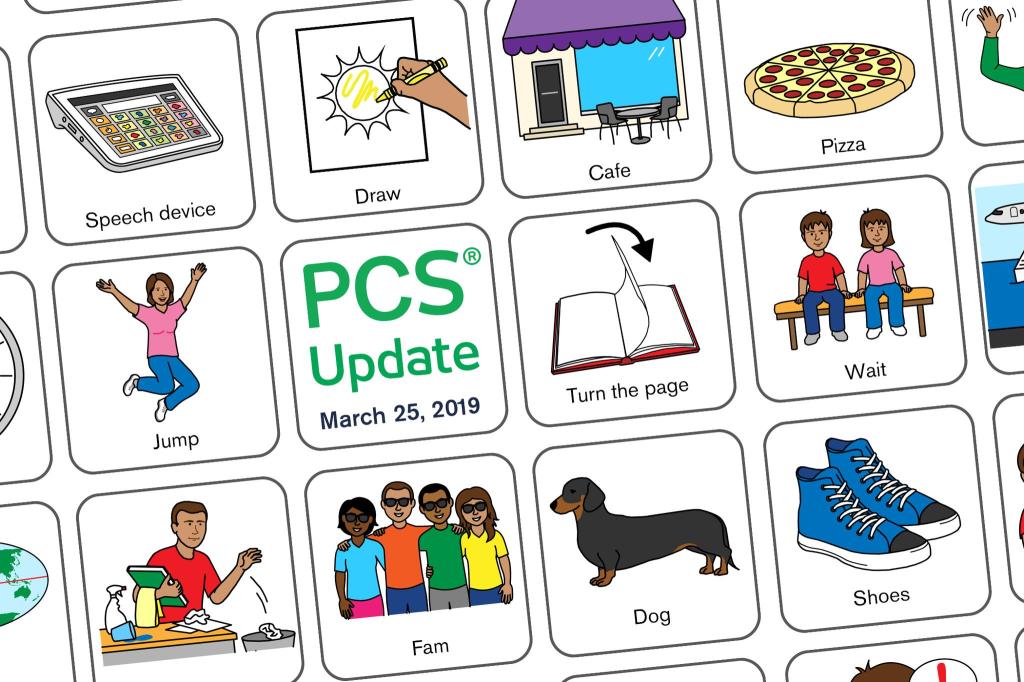
Boardmaker Online is an educational subscription service which provides pictorial activities tailored to an individual’s specific learning needs. These activities can be printed out or used interactively online through the iPads. For the library to provide this free of charge would come as a great relief to parents, educators and carers.
The results of a project like this not only benefit people with autism. Frontline library staff have an increased awareness of the needs of their users and how to better accommodate them. Through partnerships with other community groups such as aged care facilities, autism awareness would grow throughout the whole community. The social and digital inclusion factors would primarily benefit people living with autism but would indirectly benefit everyone involved.
For the library this project would result in an increase in users. They would need more accessible space as users spend more time at the library doing activities and more computers and/or assistive technology as users spend time playing Minecraft or using Boardmaker Online, although this could probably be accessed from home.
As highlighted by Fitzgerald et al. (2015) these projects are not commonly implemented in other libraries outside the original founding library or community. Once these projects have had positive outcomes it would be beneficial to publish these outcomes and focus on implementing them in other places around the country. To undertake a two year project like this would have required a large amount of staff time, resources and hence funding, making the Pierre Gorman award crucial to the implementation of this project.
References:
Fitzgerald, B., Hawkins, W., Denison, T., & Kop, T. (2015). Digital inclusion, disability, and public libraries: A summary Australian perspective. In B. Wentz, P. T. Jaeger & J. C. Bertot (Eds.), Accessibility for persons with disabilities and the inclusive future of libraries, Advances in Librarianship, 40, 213 – 236. DOI 10.1108/S0065-283020150000040019
 Technological Foundations
Good discussion. You are right that the award has a number of postiive benefits. Libraries are moving towards accessibility and inclusion. What do see are the barriers for libraries in this area?
LikeLike